
The US Treasury is developing a custody framework for Bitcoin held by the government.
US Treasury plans hybrid custody for US-held Bitcoin under Executive Order 14233, using government keys and outside custodians to reduce risk.
The US Treasury is developing a formal custody framework for the federal government’s Bitcoin holdings, Crypto Briefing first reported on November 13. The proposed approach pairs keys held directly by the government with outside custodians, instead of relying on a single custody method. The work is described as focused on operational custody, not as a response to any outside breach.

A reserve created by Executive Order EO 14233
The custody plan applies to the Strategic Bitcoin Reserve created by Executive Order EO 14233 on March 6, 2025. That order lets the Treasury manage Bitcoin forfeited through civil and criminal cases and bars routine sales of the coins, with limited exceptions.
The reserve’s stockpile was built mostly from those forfeitures. That origin is central to the current custody discussion: coins that arrived through court cases were never held under one uniform arrangement. As the federal government treats a larger set of holdings as a strategic reserve, it needs a custody design that can cover assets collected in different ways.
Why the Treasury is not choosing one custody model
For a government stockpile, offline storage has long been the default assumption: keys held directly by the owner, away from intermediaries. That view has taken visible damage from high-profile firmware problems in hardware wallets, which have complicated cold storage’s reputation for safety.
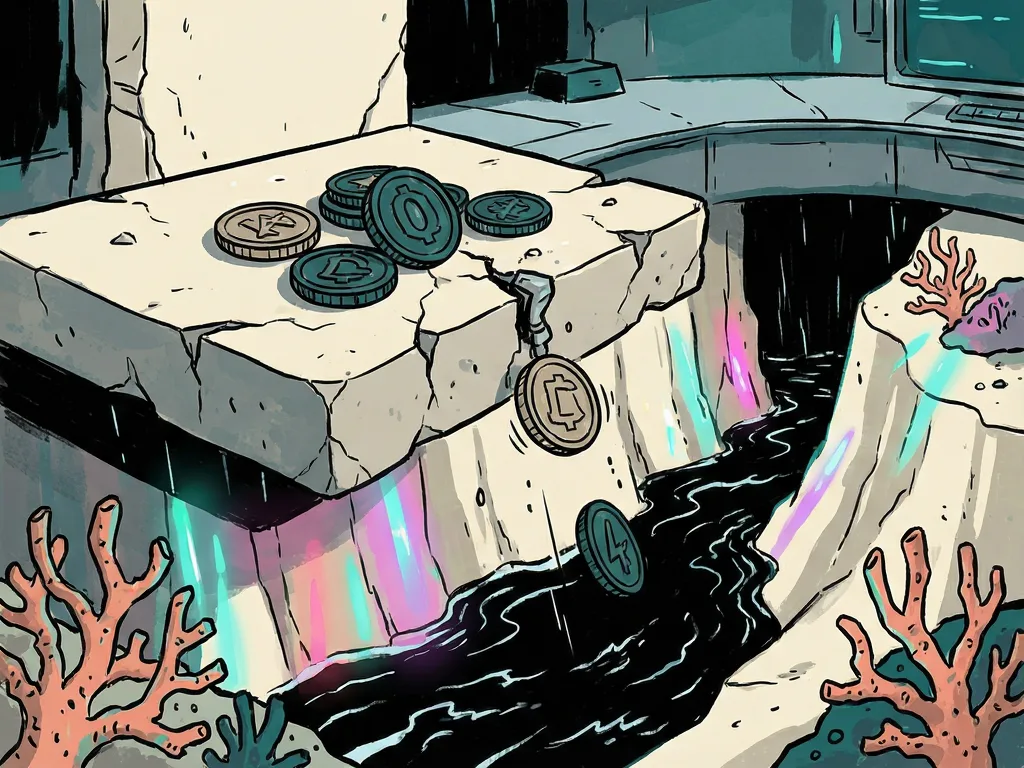
A hybrid model addresses that weakness by avoiding a single point of failure. Under the approach described, neither the government’s own keys nor an outside custodian would be the sole arrangement on which federal coins depend.
The model also points to a broader operational stance. The United States is one of the largest known state holders of Bitcoin, and the custody framework signals an intention to treat the asset as a sovereign reserve holding with ordinary operational plumbing. That means security through a mix of internal control and vendor contracts, rather than reliance on a pocket device.
Institutional rails are forming around digital asset custody
The Treasury’s plan sits alongside other moves to build more formal custody infrastructure. Ramp has applied to the OCC for a national trust bank charter to custody digital assets. Those developments suggest that sovereign holdings are increasingly being discussed through institutional custody channels.
Because the US government holds Bitcoin already acquired through forfeitures, its custody choices may matter beyond its own holdings. Other sovereign holders are likely to watch how the United States structures key management, vendor use and operational controls.
Moved assets and unsettled sale questions
The custody framework is being developed after government wallets moved more than $100 million in seized Bitcoin and BNB. Those movements occurred before any custody design was settled. No sale has been confirmed.
For readers, the key issue is not a confirmed change in the reserve’s sales stance. The stated baseline remains that routine sales are barred, with limited exceptions. The practical question is whether the Treasury will formalize a split between government-held keys and third-party custody, and how that structure will operate for assets that entered federal control through civil and criminal cases.
Risk note
This independent informational report is not investment advice. Digital assets can be volatile, and custody arrangements involve operational, technical and counterparty risks. No outcome is guaranteed.
Keywords: #US Treasury#Bitcoin custody#Strategic Bitcoin Reserve#Executive Order 14233#hybrid custody
Continue with these






Discussion 0
- No questions yet. Ask the first one below.