
Minos Bittensor Public Beta Goes Live Without Subnet Rewards
Minos launched a macOS beta for Bittensor Subnet 107. It tests local AI drafting, Mac rechecks, and evidence uploads; on-chain rewards are not live.
On November 7, 2026, Minos launched a public macOS beta for Bittensor Subnet 107. The Minos Bittensor public beta is a downloadable Apple Silicon app for macOS 14 or newer. It sends an assignment to a user's own AI, asks that AI to produce a scientific literature brief, then uses the Mac to inspect the brief and upload a signed evidence bundle. During the beta, on-chain subnet rewards for this workload are not live. The project made the announcement on its official channel the same morning, thanked early testers, and directed users to its website. Its product page is explicit about the economics: this is a public beta, and subnet rewards are not active.
The app rehearses a new subnet role, not the live variant market
Minos is already Bittensor Subnet 107, a decentralized market for genomic variant calling. In that market, miners try to identify DNA mutations in sequencing data, while validators compare results with truth sets. The new Mac client is not that live competition. Minos describes it as a prototype miner for the subnet's next workload: evaluation authoring.
The beta workflow is split into three stages labeled Research, Draft, and Recheck. It starts with a task from Minos's test queue. The user's AI turns public literature into a scientific brief for that task. The Mac then checks the draft on the local machine. The source material and inference keys do not leave the computer; the keys are stored in Keychain. For each completed assignment, the app sends one evidence bundle through a signed upload web address. It also reports worker status and activity events to the platform API over HTTPS, and it includes the computer name when registration happens.
Today, the client can connect to Codex through a ChatGPT account, to Claude Code and Kimi Code through their command-line interfaces, and to SayGM and Chutes through API keys. The AI work consumes the user's own subscription or credit. While rewards remain off, none of this beta path is registered or submitted on-chain.
Why the project puts genomic scoring on a chain
Variant calling identifies which DNA bases differ from a reference. Existing laboratory tools include GATK, DeepVariant, FreeBayes, and BCFtools. Minos argues that accuracy should be measured in open rounds instead of being reported inside closed pipelines. Bittensor is positioned as the coordination layer: independent miners, scored work, and TAO-linked subnet emissions when a workload is live.
The AI in this Mac beta is not being asked to call variants from a BAM file. Its role is narrower: it drafts literature briefs that support evaluation authoring. The local machine then checks and packages the evidence. The project frames that as subnet preparation rather than clinical proof. The beta does not show that a genome call was clinically correct.
One assignment shows the split between preparation and settlement
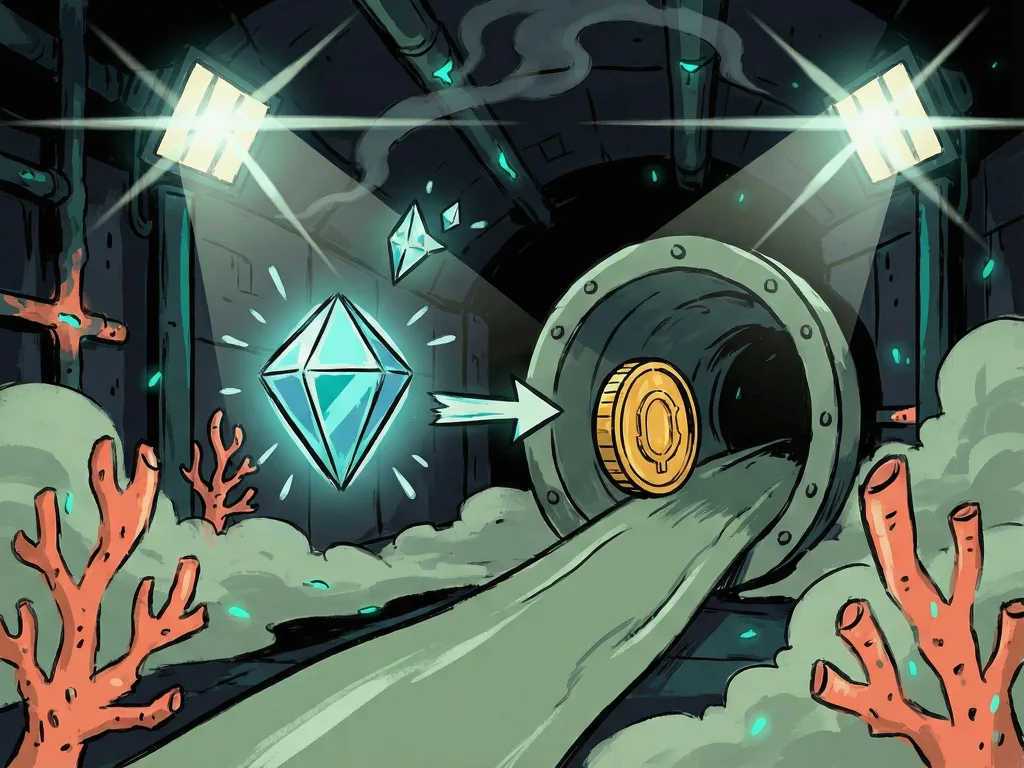
A queue task arrives. An off-chain model creates a draft. The Mac audits it. A signed bundle is uploaded. The chain does not settle that run. When rewards later turn on, the on-chain role would be to account for who performed scored work. Even then, the blockchain would not automatically certify that a brief was scientifically sound or that a future variant call matched biology.
What the beta has demonstrated
The demonstrated product surface is concrete: a Mac app, a bring-your-own-AI path, local key storage, and an evidence upload flow tied to Subnet 107's next workload. These are product facts from the company's pages and its November 7 announcement.
The larger genomics thesis is still unproven by this beta. Continuous, incentive-aligned benchmarking of variant callers, broader coverage of hard genomic regions, and later work on custom callers, consensus AI, and production services are roadmap language. The client shows that a machine produced a draft, that local software ran a recheck path, and that a signed bundle reached Minos's API. It does not show that an AI brief was right.
The missing reward is the boundary
The important limitation for AI and blockchain readers is that subnet pay is not active. A public miner without live rewards tests installation, model-account connections, and bundle delivery. It does not yet test whether Bittensor emissions can buy better genomic accuracy at scale.
The experiment belongs to a wider group of decentralized artificial intelligence product tests that redefine what a stake or a client does. The source article cites 0G's path from staked assets into AI compute credits as a comparable example. Until rewards light up for this workload, the Minos Bittensor public beta remains a client and a queue, not a paid decentralized science market.
What to watch next
Minos is trying to convert DNA variant accuracy into scored subnet work. The macOS beta opens a literature-and-evidence preparation lane on that path. The next question is whether signed bundles become on-chain scored jobs, and whether those jobs improve real variant calls rather than only the narrative around them.
Risk note: This report is informational and not investment advice. The public beta has no active subnet rewards, does not guarantee earnings, and the AI drafting path uses the user's own subscription or credit. The original report appeared on Live Bitcoin News.
Keywords: #AI#Bittensor#Minos#Subnet 107#macOS
Continue with these

Discussion 0
- No questions yet. Ask the first one below.