
US stocks lose $1.3 trillion as the Chicago Board Options Exchange Volatility Index rises.
US stocks lost $1.3 trillion on November 17, 2026, as tech and AI shares slid before Nvidia earnings and National Security Agency network downtime.
US Stocks Lose $1.3 Trillion in November 17 Selloff Ahead of Nvidia Earnings and National Security Agency Outage Report
Core Sell-off: A Broad Tech-Driven Loss
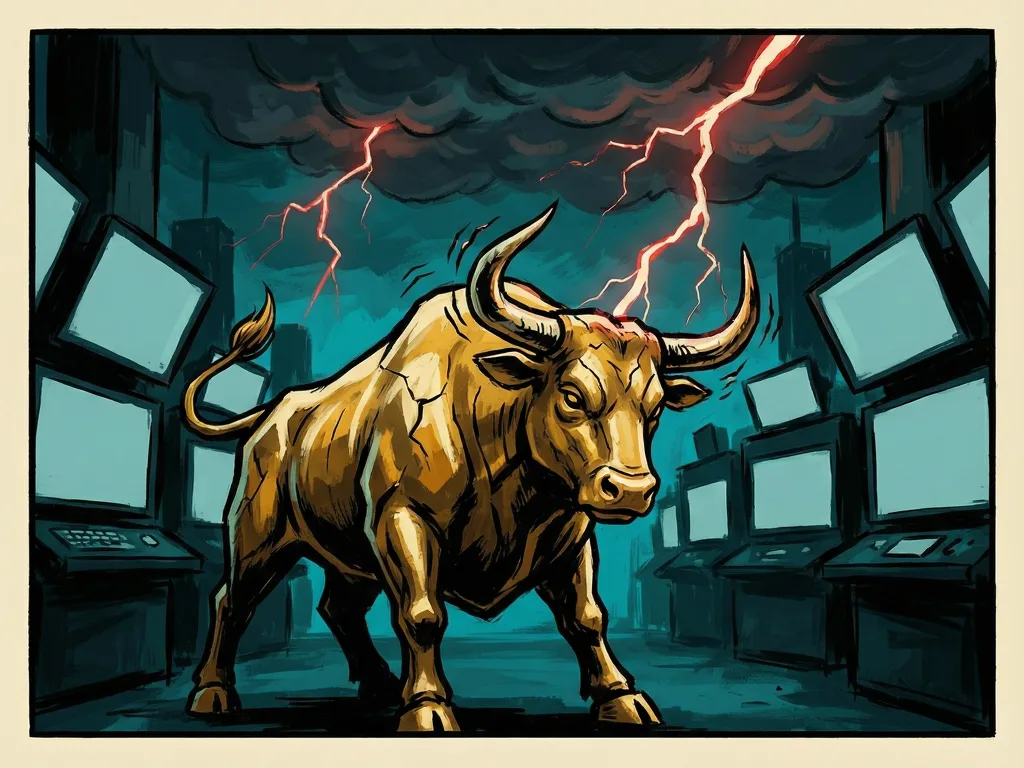
US stocks continued to face pressure on Tuesday, November 17, 2026, as a tech-driven selloff wiped out about $1.3 trillion in market value during the session's lowest moment. The selling spread across the market, and Wall Street's major indexes, including the S&P 500, Nasdaq Composite and Dow Jones Industrial Average, fell sharply.
Index Moves Show Software, Healthcare and AI Anxiety
The Nasdaq Composite pulled back roughly 1.6%, adding to a steeper decline recorded earlier in the week. The Dow Jones Industrial Average fell about 1.4%, with software and healthcare names such as Salesforce and UnitedHealth weighing on sentiment. The S&P 500 slid by around 1.3% amid broad caution across US stocks and AI-linked stocks.
Nvidia Report and National Security Agency Network Downtime Set the Tone
Major averages fell to their lows as investors braced for Nvidia's third-quarter fiscal 2027 earnings report, scheduled for release after the U.S. market close on November 17, and reacted to a report that a network used by the National Security Agency for classified internal communications had faced downtime. CNN reported the development, and while there was no evidence of a cyberattack reported yet, the news still weighed on the stock market.
The San Francisco-based chipmaker's stock dropped by 1.47% to roughly $153.85, down from a previous close of $156.14, extending a broader sell-off following Jensen Huang's departure. Investors remained cautious about AI-linked stocks ahead of the announcement.
Cboe Volatility Index Hits Two-Week High
Coinciding with the U.S. equities plunge, the Cboe Volatility Index rose sharply on Tuesday, climbing to around 25.79, a 12.57% surge from the prior close of 22.91, per data from TradingView. The current level also marks a two-week high amid broad U.S. stock losses.
The Cboe Volatility Index measures the market expectation of 30-day forward-looking volatility for the S&P 500 Index, serving as a live gauge of risk in US stocks and investor sentiment. A higher reading usually points to more fear and bigger expected price swings.
A continued surge in the Cboe Volatility Index means US stocks could see choppier trading and wider daily moves in the upcoming session. Nonetheless, the index is not a guarantee that stocks will keep declining. It only serves as a contrarian buy signal.
What Readers Can Watch Next
Traders will be watching Nvidia's earnings report, Anthropic's IPO debut set for Thursday, November 19, and macroeconomic developments to determine the general short-term outlook for US equities. For readers, the episode underlines how a concentration of AI-linked exposure, a major chipmaker's results and a national-security technology headline can quickly shift market risk in a single session. The next trading days are likely to be shaped by whether those event risks are resolved, delayed or replaced by fresh macroeconomic signals.
Risk note: This article reports market information and does not provide investment advice or guarantee any profit. Market conditions can change rapidly, and volatility may increase losses as well as opportunities.
Keywords: #AI stocks#US stocks#Nvidia earnings#volatility index#National Security Agency
Continue with these







Discussion 0
- No questions yet. Ask the first one below.