
The major bank test on the XRP Ledger covered only two of the ten rules.
XRP Ledger had only two of ten GL1 principles verified by CertiK; GL1 banks, regulators did not approve it. PermissionDelegation limits signing keys.
On November 18, 2026, at 17:51, the XRP Ledger Foundation said XRPL is the first public, permissionless layer-1 blockchain to have two of the principles in the GL1 Market Infrastructure Toolkit independently verified. The Foundation cited a CertiK attestation report dated November 13. The statement described the check as an external review of two areas within a broader self-assessment covering ten principles.
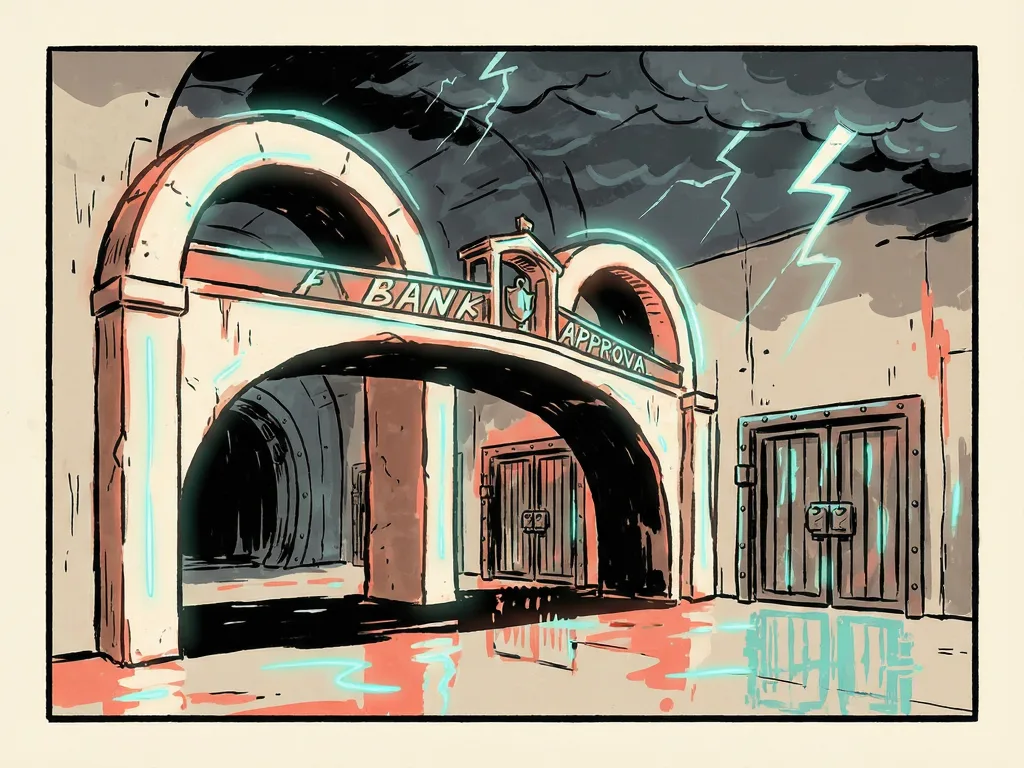
CertiK Reviewed Two Areas; the Foundation Graded Eight
The Foundation said it completed a self-attestation against all ten principles of GL1’s toolkit. The ten areas include governance, legal basis, settlement finality, operational and cyber resilience, access and participation, and data and privacy. CertiK reviewed only the responses and evidence filed under Architecture and Resiliency. GL1’s toolkit website shows the same division.
The public release does not disclose CertiK’s findings, quote a CertiK reviewer or identify the XRPL software version examined. Institutions that need details beyond the headline must request the report.
The Toolkit Was Built for Networks With a Single Operator
GL1’s toolkit builds on the Committee on Payments and Market Infrastructures and International Organization of Securities Commissions Principles for Financial Market Infrastructures, the Digital Asset Securities Control Principles and the Global Blockchain Business Council’s risk mitigation framework. Many controls assume that one operator runs the network. XRPL has no single operator.
Where a control did not fit, the Foundation explained how protocol design, open-source governance, the amendment process and issuer compliance tools address the corresponding risk. For a bank’s risk team, that means evaluating whether each substitute control manages the same exposure as the control it replaces.
XRPL is not the only organization listed in GL1’s toolkit. GL1 thanks participating organizations for self-attestations and/or feedback and does not mark the status of entries without a verification label. Only one other listed entry carries a CertiK verification label, and it operates a permissioned network. The Foundation’s “first” claim depends on the qualifier public, permissionless.
GL1’s Backers Did Not Approve the Ledger
The Monetary Authority of Singapore convened the original GL1 initiative with global banks and policymakers. On November 4, HSBC, Kinexys by J.P. Morgan, MUFG Bank, Societe Generale-FORGE and Standard Chartered turned the initiative into an industry-led non-profit based in Singapore. The working group behind the toolkit includes the Bank of England, Banque de France and the Monetary Authority of Singapore.
None of those institutions approved XRPL. The Foundation’s release says the attestation is not certification, approval or endorsement by GL1, any central bank, regulator or participating institution. It also says the attestation is not a finding that XRPL meets the standards from which the toolkit draws. The release tells institutions to run their own assessments.
Brett Mollin, the Foundation’s Executive Director, described the exercise as a response to institutional fatigue. He said institutions do not need another white paper arguing that public ledgers can carry tokenized assets; they need evidence their compliance teams can map. The mapping, however, stops at the network layer. A payment still requires the bank’s own controls before, during and after settlement.
A Ledger Response Is Not Settlement
Permission Delegation went live on mainnet on October 8 through the PermissionDelegationV1_1 amendment. It replaced an earlier version that never reached mainnet after a bug surfaced in testing. The amendment lets an account give a delegate up to ten specific permissions, so routine signing can use limited keys while the master key remains offline. Delegates cannot change keys or grant themselves additional powers.
The protocol enforces each permission. The bank decides who holds the permissions, how keys are protected and what happens when an employee leaves. Coindoo has separately described the wallet-control setup.
The ledger’s response to a submitted transaction does not by itself prove settlement. XRPL’s finality documentation separates an early response from the result recorded in a validated ledger. Validated ledgers also contain failures, and some failed transactions still pay a fee and appear in the record. An operations system that sees a transaction in the ledger and stops checking could credit a customer for funds that did not move.
Bank software must read the final result code and the balance changes actually made by the transaction. Partial payments add another complication: the delivered amount can be lower than the amount field, and only the delivered figure counts.
A dropped connection creates a harder failure mode because the bank may not know whether a payment failed, succeeded or remains pending. XRPL’s submission guidance tells applications to assign every transaction a last valid ledger so a lost instruction expires at a known point, and to confirm the original transaction’s fate before sending a replacement. If that check is skipped, the bank can pay twice.
Issuer Settings Decide What the Bank’s Customer Holds
Even after a transaction validates, the issuer controls whether the recipient can move the tokens later. Under XRPL’s freeze rules, an issuer can freeze a single holder’s trust line, preventing that holder from sending tokens anywhere except back to the issuer. A deep freeze can also stop receiving and trading. A global freeze can affect every holder of everything the issuer has issued.
An issuer that wants to remove these freeze powers can set No Freeze, a permanent flag that only the master key can sign. Clawback has a stricter activation clock. An issuer must enable it before its account holds any trust lines, offers, escrows or similar objects, so it cannot add clawback to a token already in circulation. Clawback and No Freeze cannot coexist, and neither tool affects XRP.
A clawback is a new transaction rather than a rewrite of history, but it changes what the customer actually holds. These settings sit on the issuer’s account and can be queried by anyone. For a single token, they can matter more to a bank’s risk assessment than a network-wide attestation.
The Brazil example shows the issuer side in practice. In a September 29 announcement, Ripple and depository CSD BR said XRPL now mirrors records of BTG Pactual fund shares as Multi-Purpose Tokens. CSD BR’s systems remain the official record. The ledger lets authorized participants audit that the two match, and only Brazilian corporate and banking clients that clear KYC and AML checks can join.
CSD BR also keeps the power to freeze holdings or claw them back when a regulator or court orders it. Whatever the ledger shows, CSD BR’s register and Brazilian law decide ownership. Coindoo has reported on XRPL’s entry into Brazil’s fund system.
Amendments Can Move Faster Than the Attestation
XRPL changes through amendments. An amendment takes effect after it holds support from more than 80% of trusted validators on the default Unique Node List for two straight weeks.
The network has changed recently. Permission Delegation arrived on October 8. Within weeks, validators enabled fixCleanup3_4_0, which closed a gap that allowed a delegated burn permission to create new tokens.
The Foundation said it intends to refresh its assessment as the toolkit evolves and new amendments activate. For readers of the November release, the immediate gap is narrower: because the release does not name the software version CertiK reviewed, a risk team cannot determine which changes from that autumn are covered by the attestation. The first practical question for any institution using the report is whether the attestation matches the version it is operating.
Risk Note
This article is independent commentary and not an official notice from the XRP Ledger Foundation, CertiK, GL1, the Monetary Authority of Singapore or any other named institution. It is not investment advice and makes no guarantee of profit. Tokenized assets and public ledgers involve operational, legal, custody, market and regulatory risks, and institutions must perform their own assessments before relying on any attestation.
Source Note
This account is based on reporting by Alexander Zdravkov, a Coindoo market analyst and crypto journalist. He began covering crypto more than four years ago, holds a degree in International Relations, and has authored more than 5,000 articles covering cryptocurrencies, traditional finance and global market developments.
Keywords: #XRP Ledger#Institutional Adoption#GL1#CertiK#Permission Delegation
Continue with these




Discussion 0
- No questions yet. Ask the first one below.